Hacine’s purchase of the Suzuki
And Their Children After ThemHacine Bouali’s purchase of a Suzuki DR 125 is a small, consequential act of self-direction: he buys a motorcycle without planning or consulting Coralie, despite their precarious finances and the responsibilities of life with their baby, Océane. The bike gives him a way to leave the apartment and ride alone, but the brief relief it offers does not settle the deeper unease that drives him. Instead, the purchase makes visible a growing mismatch between Hacine’s need to escape and Coralie’s attempt to keep their shared life manageable.
The purchase and its immediate costs
A salesman at the store where Hacine works advertises a Suzuki DR for sale, and Hacine goes to see it at once. He writes a check without stopping to consider the decision. The price is 1,000 francs, but the cost is not only the money: Coralie points out that the couple already owes her parents, that they will not be able to take a vacation that year, and that they no longer have a garage. Hacine has no motorcycle license, and Coralie is also worried about the danger of riding. The practical objections accumulate around his impulsive choice, making clear how little room the household has for an unplanned expense.
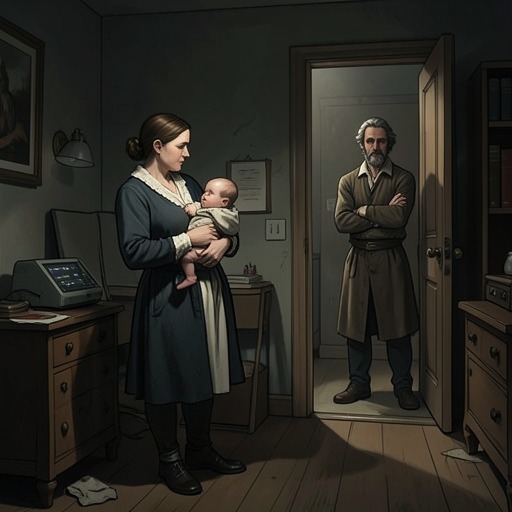
The argument takes place amid the ordinary demands of caring for a baby. Océane is in her crib tearing pages from a La Redoute catalog while Coralie, exhausted and visibly struggling with changes to her body and daily life after the birth, tries to stay calm in front of her. The motorcycle purchase therefore lands in a home already under pressure. Coralie asks when Hacine will grow up; he does not have much to say when she raises the debt to her parents. He withdraws from the argument rather than offering a plan for how the purchase will fit into their finances.
A ride as temporary escape
After Coralie retreats to their bedroom, Hacine takes the motorcycle out. The ride is not presented as a confident display of skill or freedom. He trembles as he changes gears, frightens himself several times, and feels that he wants to flee. The near-empty tank cuts the outing short: he has not brought his credit card and cannot continue, so he returns home a little before ten. This first ride gives him distance from the argument, but its limits are literal as well as emotional. The bike can take him away for a while, not out of the circumstances he is trying to avoid.
When Coralie asks whether he is happy, Hacine answers yes. The answer sits beside the trouble that led him to leave and the shortness of the ride. It registers a real pleasure without implying that the motorcycle has made his wider life easier. The distinction matters: he is not simply buying an object to solve a practical problem. His purchase gives an outlet to feelings he cannot readily explain, while leaving the couple to face the same debt, domestic pressures, and disagreements when he comes back.
The purchase within their relationship
The narrative places Hacine’s reaction to the baby beside Coralie’s. He is not jealous of Océane and does not resent the care she requires. But where Coralie had carried an inner emptiness that the baby seemed to fill, Hacine feels no corresponding space that fatherhood can occupy. Océane arrives as an addition to his existing unhappiness and anger, not as a change that makes life sufficient. The account stresses that he cannot fully explain this difference. The motorcycle purchase follows from that unresolved discontent, not from hostility toward the child.
Coralie, meanwhile, is trying to hold daily life together. Her anger at the purchase is grounded in specific household needs: repayment, the lack of a garage, the lost vacation, and Hacine’s lack of a license. She eventually compromises, and Hacine makes an effort, but the relationship gradually takes on the character of a war of attrition. Coralie reproaches him for acting as he pleases and behaving like a child; he keeps his own complaints inside. Their accommodation does not amount to agreement. It lets life continue while resentment accumulates on both sides.
Repeated rides and the limits of relief
After the initial confrontation, Hacine goes out in the evenings for rides, without a helmet. The habit reassures him, and for a time their life together seems to stabilize. That improvement is provisional: it does not erase the underlying conflict, and the account soon sets it against the pressures surrounding the 1998 World Cup. Hacine’s father-in-law taunts him about Morocco’s prospects; after Brazil defeats Morocco, the mockery intensifies, though Morocco later beats Scotland 3–0. These football exchanges add another strain to a household in which Hacine already feels hemmed in.
When France plays Denmark, Hacine does not go straight home from work. He watches the match at a bistro with his workmates, wanting to see the game but also unable to face the apartment, his in-laws, and the crying. He has a beer and watches with both satisfaction and a bad conscience, so preoccupied by the scene he expects at home that he misses France’s first goal. He leaves at halftime, frustrated and guilty. The episode does not establish that the motorcycle purchase causes this later avoidance; rather, it echoes the pattern already visible in his first ride. Hacine seeks intervals away from domestic life, but the relief remains temporary, and he returns to unresolved responsibilities and strain.